A downturn in the weather now past, this was a long, ‘lockdown’ trek into the moors (or the nearest thing we have to moors) in the hope of some new locations for Grizzled Skipper.
male Swallow
After a Swallow and my first Cinnabar of the year, I bumped into Dave who coincidentally had the same idea so we tagged along for a while, exploring the currently inactive Great Central Railway together (at a safe distance) and especially an area cleared of invasive bramble and thorn but we found no evidence that the colonising food plant has attracted the desired butterfly.
Here we met the enthusiastic Paula Barnes of Gotham and had a long natter (from at least 10 metres apart) on the wonders of the moors’ wildlife – she saw a Hen Harrier here last winter.
This stuff causes my wife and me some angst.
Field Horsetail
Field Horsetail (Equisetum arvense) is a nuisance weed in our garden but it has its place in the wild. These are the fertile, spore-producing shoots which come up early in the season.
I could hardly disguise Dave’s presence and at the same time profess to knowing this was Hieracium section hieracium (at least not without a rucksack weighed down with books and several hours at one spot.
Hieracium section hieracium
And this one is Crepis biennis – a simple jizz glance for him
Crepis biennis
I did spot what I am fairly certain was a Grizzled Skipper at Rushcliffe Halt though flight identifications of such a small and flighty insect are a bit ropy and this one didn’t settle in view, but my first Small Heath of the year obliged at its sun-lounger.
I packed my week’s permitted exercise into one day and walked out to the Owthorpe area via Borders Wood and back home through Cotgrave Forest seeing and hearing just two Buzzards and no other raptors despite clear blue skies and a bracing easterly. I did hear my first Lesser Whitethroat though.
Hoary Cress (Lepidium draba)
Hoary Cress is now on show along our lanes and the soft verges along the track adjacent to the A46 have a massive population of Glaucous Sedge.
Glaucous Sedge (Carex flacca)Taddies
Despite extensive looking in the very nice wildlife ponds at the A46 I managed to see just two tadpoles but this puddle in a wheel rut in Borders Wood was chock-a-block with them.
Borders Wood also hosted my first odonata of the year – predictably Large Red Damselfly.
Large Red Damselfly (Pyrrhosoma mymphula)
Views from the footpath near Cropwell Wolds Farm are immense with a near 180° panorama of the Belvoir escarpment to the east and most of Nottingham to the north-west.
Nottingham and beyondWe occasionally get birds (just small ones) on our mouse table.
A few hours (oops sorry Mr Gove – just the one permitted hour) along Lings Lane in the hope of a passing migrant but Swallow and Whitethroat were the only summer visitors though the latter obliged with a fleeting pose.
Whitethroat
And nearby a female Linnet sat watching the world go by for several minutes.
Linnet
I found the most severe case of Ash die-back I have so far seen, in a hedge along Lings. It is a mature tree but has been flailed as a hedge plant and looks to be entirely dead or soon to be – no attempt to flower or leaf up.
Candidates for Midland Hawthorn are easy to pick out at the moment as they are inclined to come into flower a week or two earlier than their more frequent congener. This one has the requisite two styles but the leaves would not have drawn my suspicion.
Midland Hawthorn (Crataegus laevigata)
Cuckooflower has multiplied in Keyworth Meadow since the hay crop has been taken off annually and the Cow Parsley that had moved in after years of poor management has all but disappeared. There were no Cuckoos though and since I haven’t seen or heard one in the parish for several years now I don’t expect I ever will again. The chilly NE wind didn’t put off the butterflies.
Orange-tip on Cuckooflower (Cardamine pratensis)
And here’s a Swallow Prominent that was only half attracted to the light trap a couple of days ago.
After four successive days work, a sunny morning got me out on a spontaneous trip to Skylarks with the additional motivation of several goodies on the menu.
I was overly generous in inviting along the resident dogs (Staffie and poodle) along with my closest human residents which spoilt the experience but they kept out of the way while I scoped up Red-necked Grebe, Smew (3 including a drake) and a Long-tailed Duck.
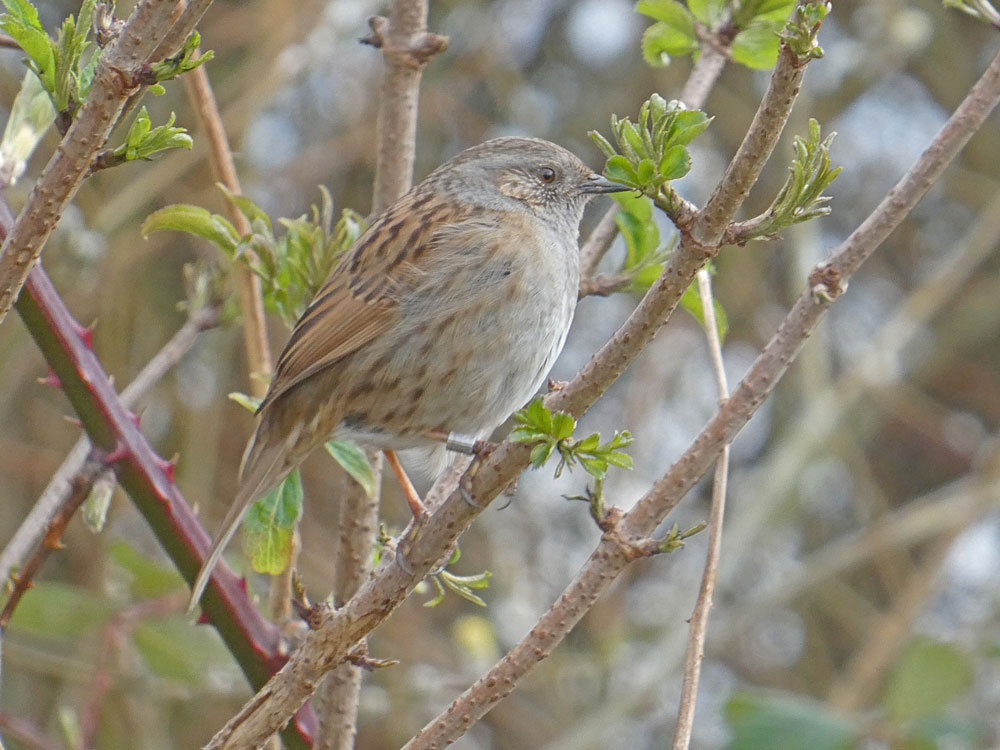
They were all way beyond the capacity of my little camera but the rapid chimes of a confiding Dunnock drew my attention.
Dunnock
The ring suggests a resident bird but as far as I am aware, the local ringing group does not operate here much these days so this may be an elderly bird?
There is a large grassy area to the north of the watery bits of the new reserve (Blott’s Pit) that doesn’t seem to have a name but did have some heather on it a few years ago indicating its sandy nature so I’ll call it Heath Field for now and I found this on it:
Otidia bufonius
I’m going to stick my neck out here and assert that this is Otidia bufonia though the literature is rather short on information about this particular Otidia or suggestive that it should be in a wood.
A local wander around Old Wood and the neighbouring area began with a lovely morning and ended with a strong wind and the lightest of showers.
Wood Anemone
Signs of spring were restricted to the flora and a bit of bird song but Wood Anemones and Primroses were cheering harbingers though scattered Prunus cerasifera was looking good too and attracting a few bees that I think were honey bees.
Cherry Plum (Prunus cerasifera)
I occasionally played some bird songs using the Aves Vox app and a portable bluetooth speaker but the responses weren’t up to much and I think this Nuthatch‘s proximity was pure coincidence.
Nuthatch
Frogs too had recognised the lengthening days, and these two were in amplexus in a muddy pond in the wood but no spawn was visible.
Mr and Mrs Frog
Dave is refreshing his bryophyte knowledge (which was always way ahead of me and my mushrooms) naming these two and many others at a glance.
Plagiochila asplenoidesBryum capillare
Whereas I have looked long and hard at this…
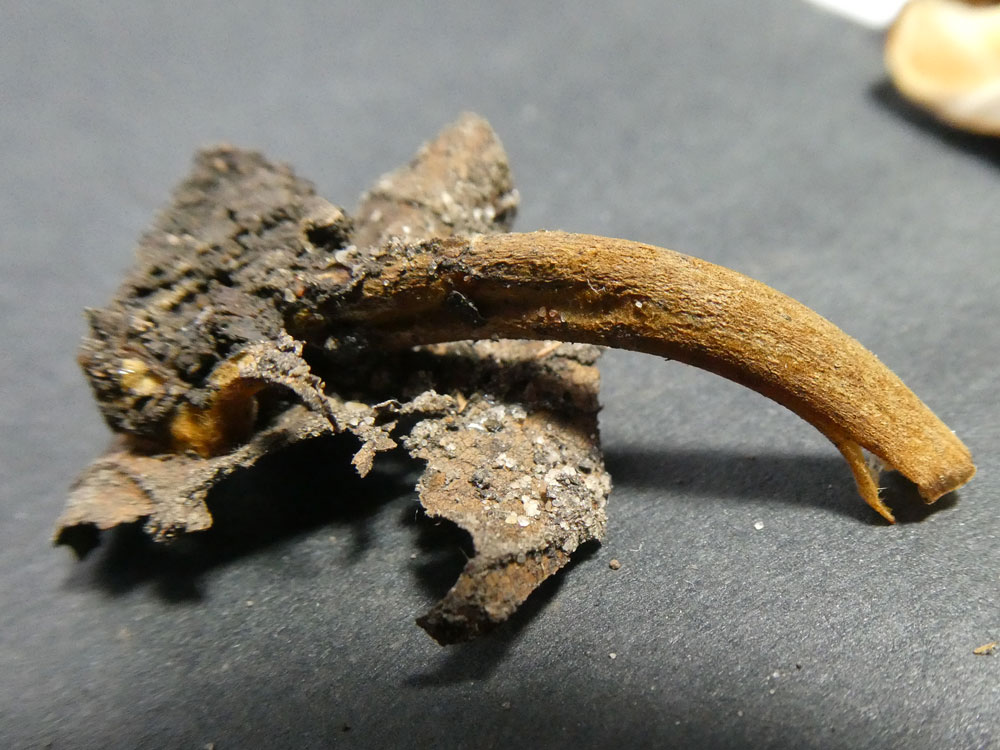
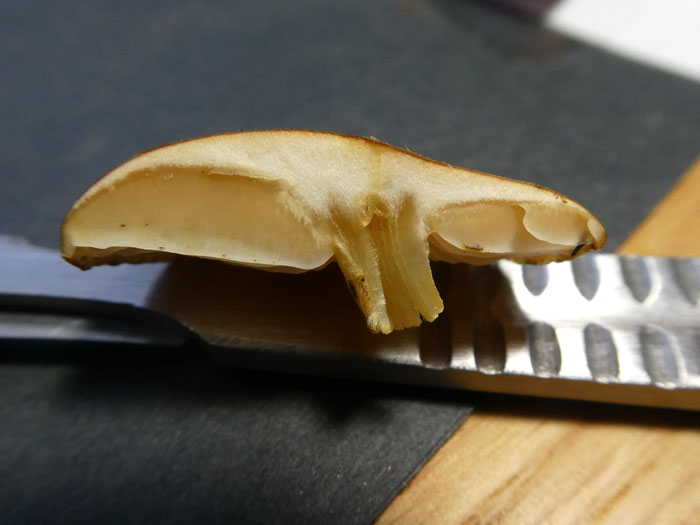
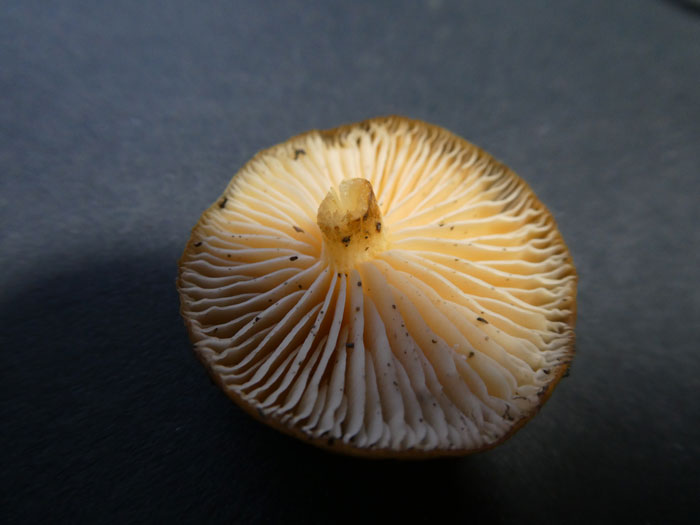
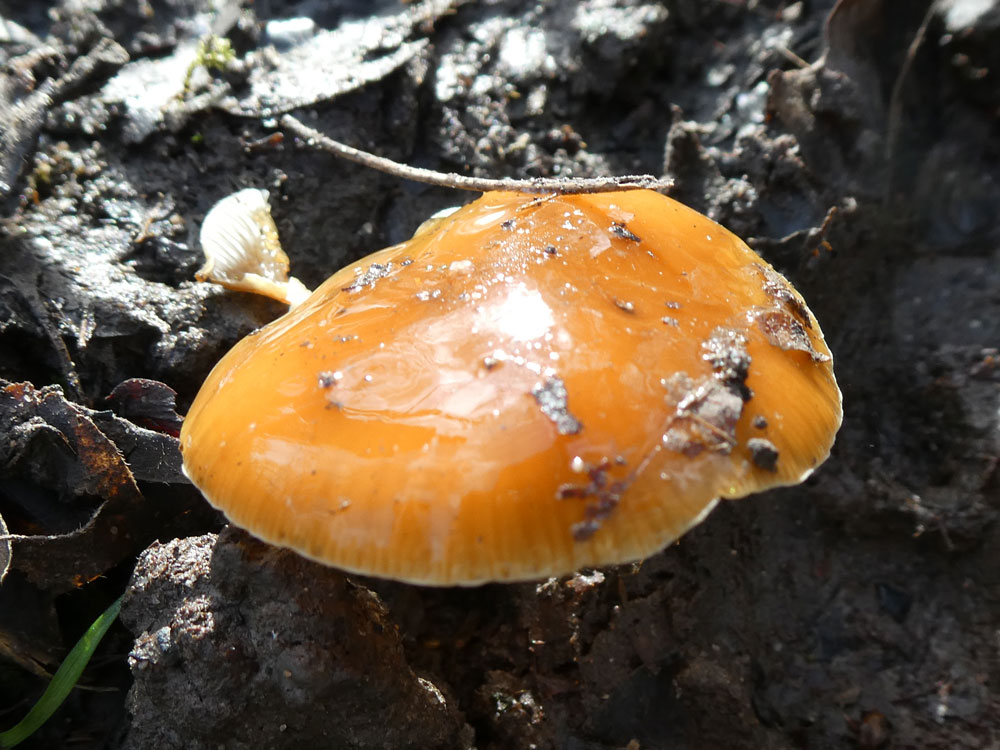
…before erring towards Flammulina velutipes despite it being on the woodland floor (it was attached to buried wood) and despite it being on its own rather than tufted. In its favour it was sticky-slimy when wet, it has intermediate gills, produced no latex, has no volva nor ring on stalk, I’d say the gills are free and the stem is tough and curved, though I’m not so sure that it is velvety, which is a bit of a downer, given its English name of Velvet Shank. Anyway it looks like the pictures in my books!
Here are some more pictures because if I survive Coronavirus, I may live long enough to get a little more knowledgeable about mycology and revisit this tentative id.
A chilly, but lovely sunny morning with hardly a breath of wind found us on the east coast for about 9.30 and assembling bird lists in excess of 50 that included Red-throated Diver, Turnstone, Eider, Marsh Harriers and Avocets.
Red-throated Diver
We saw Marsh Harriers on four occasion although there were probably only two birds (one had a trailing leg) and one of these sightings, plus the Turnstone were over the RSPB reserve but the other highlights were all at Cut End i.e. the mouth of the River Witham or The Haven as it is known downstream of Boston.
Meadow Pipit
Several Meadow Pipits accompanied us on the three kilometre stroll along the sea wall and a brief moment was taken to remember that “This bank was begun manually by the staff and boys of North Sea Camp 13 March 1936.”
Monument
The plaque goes on to say that “In this year of 1974 over 500 acres claimed from the sea are ploughed. Another 200 acre enclosure is imminent and plans include a 700 acre strip seawards.”
The 700 acre strip never happened but 66 hectares (163 acres) was reclaimed (by HMP) in 1983 and then in 2002 the bank was breached in three places as managed realignment, allowing the sea to claim back the territory lost.
I never did Latin but the inscription footnote, QUANQUAM MALEFACTORS JUVENES ILLI PATRIAE BENE FECERUNT, I think means “Although young lawbreakers, they did good for their country”
Unlike Geoffrey Archer then, who became a resident of North Sea Camp after it changed from Borstal to Prison.
English Scurvygrass
The saltmarsh is largely still in its late winter condition but Cochlearia anglica was looking lush and ready for spring and who can pass a drake Pintail by without a picture?
I’ve a feeling this Pilot boat was exceeding the 6 knot speed limit as it chased the sea-bound coaster and it certainly put the wind up the Red-throated Diver that had tolerated the passing ship.
CutEnd or “Clay Hole” as the OS call it.
The piping of the Redshanks and the honking of the Brent Geese had the backdrop for some time of the roar of warplanes and the eerie and frightening wail of their bombs being released into the Wash.
PintailBudding inflorescences of Ash (Fraxinus excelsior)
These reminded me of caviar, though I’ve never seen or eaten it so I may be wrong.
Near disaster from the outset as I realised I’d not put my warm jacket in the car but we set off round the railway lake to see what birds we could see, with me in short-sleeved shirt and lightweight fleece jacket – though the wind speed was 0 and the sun was easing the mist from the lake.
Railway Lake 09:30
However, birding was disappointing after a fly-along Water Rail and Dave erred towards the mosses while I looked for anything that resembled a fungus – without much in the way of success. I refused to attempt a homogeneous, crumbing bracket on an oak as worthy of a challenge.
Much of the day we recalled things we’d seen on previous visits to this neck of the woods including a disputed falcon, a lot of rosettes of Bee Orchid, a Great White Egret, Rob Johnson, Scaup and Plantago coronopus. Oh! and John Hopper, who was still there keeping an eye on the place. Dave and he had a long reminiscing natter and after a quick lunch and a fruitless scan for the two Black-necked Grebes, I felt the need for shelter from the increasing breeze.
Feeding Station
The trees around the feeding station took the edge off the chill and pulled in Great-spotted Woodpecker, Chaffinch, Reed Bunting, Great Tit, Blue Tit, Goldfinch, Long-tailed Tit, Robin, Blackbird and perhaps a few others that I can’t recall.
Aldercap – Naucoria sp.
We did find a few fungi, one of which, a toadstool in my vocabulary, produced a brown spore print and which keyed out, in what I am finding to be the increasingly functional key (mentioned last week) to be of the genus Naucoria. These are the Aldercaps which, given the abundance of Alders in the area, and the resemblance to the illustrations in my books looks to be likely. There are however, a dozen species and I’m only going so far as to suggest that ours might be the commonest, Naucoria escharoides, the Ochre Aldercap.
Naucoria – spore print and gills.
As the chill of the mid-afternoon set in and I realised my thermal vest had saved the day, we spotted the ‘red-head’ Smew that had eluded us earlier in the day, shining prominently in the afternoon sun.
Adult female or first-winter male Smew – from some way off.
A cold wind developed through the day so the choice of a relatively sheltered Charnwood over Hoveringham proved wise. We started though with an exposed Swithland Reservoir with birds as the objective but from the dam, there were none worth a mention but a diversion onto the road crossing produced a white, heron-sized blob that we, I think agreed was more likely to be a Great (white) Egret than an albino heron and 7 Buzzards. The dam was more interesting for the botanist with a nice variety of wall ferns:
Then we had a drive over to a wood last visited by Dave about 22 years ago and by me, never; Poultney Wood is probably better known as part of Ulverscroft Nature Reserve and is very different from the woods of Rushcliffe so, with its acid soils, Bilberry and Heather were on the day list.
My eyes immediately honed in on the fungi which have begun to attract my interest and I was delighted to find enough to challenge me. Rather conveniently they were all fungi on trees – brackets and crusts (except for a small group of puffballs) so I was able to narrow down the choices.
I used the disproportionately expensive but very helpful “An initial guide to the identification of mushrooms and toadstools by Paul Nichol; 4th edition” (36 pages, £12) and “Mushrooms by Roger Phillips, Macmillan 2006” (384 pages, £13.98) and was very pleased to put names to four species with some confidence and three others with less certainty as follows. (This time I took a photo and a sample of them all.)
This one, the Phellinus ? keyed out quite nicely to the genus but I couldn’t pin it down. This is the underside – with distinctive-looking, elongated pores.
Phellinus ? pores.
And finally another fern to round off a fine list: Hard Fern is another rare one in Notts but which is common in the Peak District and Charnwood.
Hard Fern – Blechnum spicant
The wood was disappointingly bird-less apart from some chanting Nuthatches, though it was hardly spring-like weather and ended with a very brief sleety shower.
Our first trip out for over a month to a site that I’ve only visited for social and business purposes – never for its natural history. Dave has passed it several times but on this occasion we did the full 13.5km circuit so new ground for both of us.
Passerines were very much in evidence for the first part of the walk, much of which, though definitely not the dam, is well wooded. Dave’s keen ears soon picked up invisible Siskin and Bullfinch but I had no problem with the equally elusive Nuthatches.
Stars of the day were Bank Voles. We had seen one quite well earlier but then this little chap was spotted next to the path.
Bank Vole
It is very unusual to even see a vole but to see one climbing right next to us was extraordinary – and to manage a short video makes for a real red-letter day. Though see later for the effect a Great Northern Diver had on a passing walker.
Not much in the way of wader habitat with the reservoir full to the brim but we saw a couple of Snipe, a Redshank and Lapwings.
Peewit or Green Plover
There are signs all the way around the reservoir forbidding entry to the ‘conservation areas’ most of which feature a lapwing and its alternative names of Pee-wit and Green Plover. In all my life of bird-watching I have never heard anyone use these names – they are universally known as Lapwings.
I’ve been swotting up on fungi courtesy of Peter Marren’s book, Mushrooms (number 1 in the British Wildlife Collection) and I brought home a small sample which produced a blackish spore print and I believe I pinned it down to being of the genus Hypholoma but, fool that I am, I didn’t get a picture.
Later though I took this one.
Unidentified fungus
Which of course I can’t identify as I don’t have the specimen.
Somewhere near Upperfield Farm, Dave spotted one of the Great Northern Divers that we knew were present and a little later on we were able to view it a little closer, only we didn’t, because a passing lady, one half of a husband and wife team, showed an interest in what had attracted our attention and she was more than delighted to observe the diver through my modest telescope. She said we had made her day, asked appropriate questions about its plumage, declared that she had wanted to see this wonderful bird since reading Swallows and Amazons, and thanking us profusely for fulfilling her wishes, declared that her dream had come true. I think she was going a bit over the top when she revived how momentous the event was, as she decided we had made her decade and I told her so. Nevertheless, it cheered us up to realise we had worked such magic, as she sprinted off up the hill to catch her other half who clearly had never read Arthur Ransome’s classic or at least had not been so affected by it: I tried reading it as an adult and I couldn’t understand the nautical terminology – and that was after spending 18 months on a trawler!
It was a long walk by my standards and when we both needed a rest we magicked up a little accommodation though Dave grabbed the armchair.
A winter’s day but no wind to speak of and some warmth in the sun at times.
Cormorant Trees on South Shore, Lyndon
Egrets were the order of the day with numerous Little and at least 5 Great White. The former have not warranted a mention on bird news for years and it seems now, that their Heron sized followers are to be taken for granted.
Great White Egret
We started with a look along the shore at Barnsdale and a wander into Barnsdale Wood where I was pleased to have Dave draw my attention to Square-stalked St. John’s-wortHypericum tetrapterum and two sedges. The road to botanical competence is long and winding; Remote SedgeCarex remota, I have seen a few times but not really recognised it as being stand-out different and Thin-spiked Wood SedgeCarex strigosa, I have never seen before. I am pleased to say that I would have recognised them as being unfamiliar so I’m getting there.
Great Crested Grebe
There is a variety of sheep along the walk to the hides at Lyndon and they include this ‘panda’ variety.
Kerry Hill Sheep
I tracked it down with the assistance of google to being of the Kerry Hill breed originating from Powys around the English/Welsh border.
And a couple of recent garden encounters; a milder spell towards the end of November brought a small rush of December Moths and the first day of bird-feeder stocking tempted a Blackcap to the suet.